THE MANNA
FROM ASH

Story from 2,000 years ago…
The term MANNA derives etymologically
from the Hebrew MAN HU which meant
literally “WHAT IS IT?”
The MANNA from Heaven mentioned in the
BIBLE and the QURAN describes the
phenomenon of vegetative shoots which, lifted
by the wind, could be carried
even over great distances, giving rise to
what was known as the MANNA RAIN.
Then, as still today, Manna was perceived
as a beneficial and miraculous substance, yet
most people did not know
its true origin and had little understanding of what it really was…
Another interpretation suggests that
Manna oozed from the branches and trunk
as a result of cicada punctures,
producing a sugary, nutritious substance
that was used as food by the peoples
crossing the desert. The fact that it dripped down from the branches,
and thus from above, led to it being described as
“Manna from Heaven”.

Manna is a processed sap of some peculiar species of Ash tree, typically the Angustifolia and the Ornus.

250 years ago…
8 January 1768
Vincenzo Giuliani, Doctor and Philosopher
Manna is considered an effective remedy by physicians for chest ailments, particularly for those illnesses in which the lungs become clogged with thick and viscous phlegm, as in humoral asthma, catarrh, and moist coughs. It is administered at the onset, as it gently purges and expels the thick phlegm towards the intestines, being a mild yet effective laxative. Among hydragogues, it is preferred over all others, its properties being well known to Galen, Dioscorides, Serapion, and the Greek physician Actuarius. It can be safely administered to the elderly, children, pregnant women, and to those of frail constitution, or those in the final stages of wasting diseases…
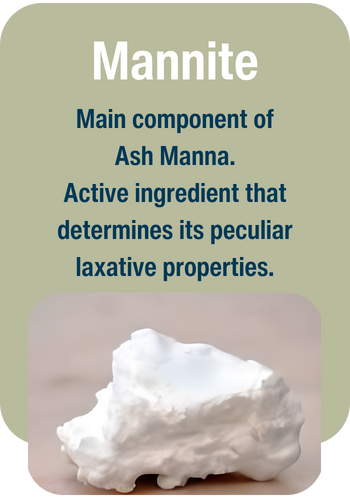
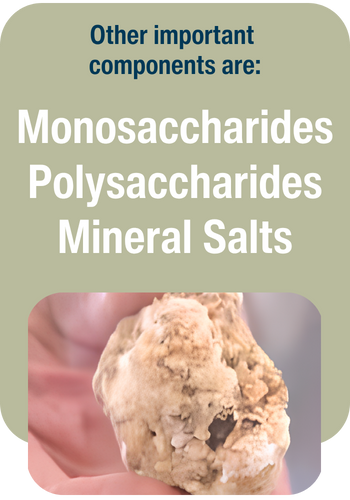
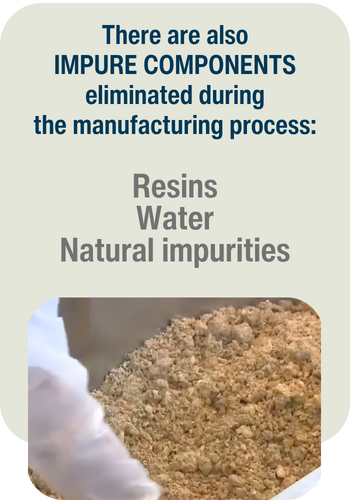
The components of Ash Manna
Lignans

They are a subgroup of non-flavonoid polyphenols.
They are widely distributed in the plant kingdom, being present in over 55 plant families, where
they perform defensive functions against attacks by pathogenic fungi and bacteria, and also act
as antioxidants.
In humans, epidemiological and physiological studies have shown that they are able to exert positive effects in the prevention of lifestyle-related diseases, such as type II diabetes and cancer.
For example, an increase in their consumption in the diet correlates with a reduction in the onset of
some types of estrogen-dependent tumors, such as breast cancer in postmenopausal women.

Phenols
They are molecules with a single benzene ring and containing, as substituents, only hydroxyl groups
(e.g. phenol and hydroquinone). They are mainly found in essential oils obtained from plants.
However, phenols can generally be attributed various beneficial properties:
antioxidant and anti-inflammatory properties, they are able to protect cells from
oxidative stress and have, among others, properties capable of keeping cholesterol levels under control; antibacterial, antipruritic, antiparasitic and cytotoxic properties.
Coumarines

Iridoids

Acid
elenolic

Esculetin and fraxetin tend to exhibit bacteriostatic and antifungal properties. They can promote wound healing and tissue formation through their anti-edematous properties.
They are a heterogeneous group
of molecules with different therapeutic
activities:
anti-inflammatory,
analgesic, antirheumatic,
spasmolytic, antiallergic
and hypotensive.
It is considered an
antioxidant, fights
free radicals, facilitates
blood circulation and in
vitro has been shown to be a powerful
antibacterial and antiviral.

Scientific studies
Beyond sugars: phytochemical profiles and standardization of manna exudates from Fraxinus excelsior L. siciliano
The study aimed to analyze the chemical composition of Ash Manna
(Fraxinus excelsior), distinguishing between authentic and fake samples.
Sugars, organic acids and polyphenols useful for verifying its authenticity were identified.
The results help to evaluate the nutritional and health properties of authentic Manna.

 About
About